Parkmania
🅿️ Parkmania: Applied Geometry and Spatial Awareness
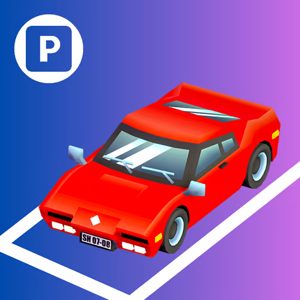
Parkmania turns the mundane task of parking into a rigorous puzzle of geometry and spatial reasoning. While it looks like a driving game, it plays like a logic puzzle. The core conflict is the discrepancy between the car's steering geometry (Ackermann steering) and the tight, rigid boundaries of the parking lot. Players must understand that the rear wheels track a different path than the front wheels—a concept known as "off-tracking"—to avoid clipping obstacles.
In the 2026 gaming landscape, Parkmania is used to train situational awareness. It forces players to utilize mirrors (conceptually) and mental maps to navigate the car into spaces that seem mathematically impossible at first glance.
🧠 Cognitive Skills: Spatial Visualization
The game is a workout for the parietal lobe:
- Mental Rotation: When reversing, the steering inputs have an inverted effect on the car's nose relative to the camera. Players must mentally rotate their perspective to steer correctly in reverse.
- Path Prediction: Before moving, the player must visualize the arc the car will take. "If I turn the wheel fully left and accelerate, will my front bumper clear the wall?"
- Patience & Precision: Unlike racing, speed is the enemy. The game rewards slow, deliberate inputs. It trains the inhibition of the impulse to rush.
🎮 Mechanics & Handling
The physics engine emphasizes low-speed maneuvering:
- Turning Radius: Every car has a fixed minimum turning radius. You cannot turn on a dime. You must use the available space to "swing out" before turning in, maximizing your approach angle.
- Collision Sensitivity: The hitboxes are pixel-perfect. Touching a cone or a curb counts as a "Crash" (or deducts stars). This zero-tolerance policy forces high-precision driving.
- The Gearbox: Switching between Drive and Reverse is instant, allowing for "multi-point turns" (3-point turns, 5-point turns) in tight alleyways.
🏆 Parking Strategies
1. The Reverse Entry
It is almost always easier to reverse into a parking spot than to pull in forward. Reverse parking places the steering wheels (front) on the outside of the turn, allowing for a much sharper final adjustment. Learn to back in!
2. Use the Full Width
When navigating a turn, hug the outside wall. If you are turning left, keep your car as far right as possible before the turn. This compensates for the off-tracking of the rear wheels, preventing them from clipping the inside corner.
🛡️ Technical Info
Accessible simulation:
- Controls: Arrow keys for steering. The response is linear, simulating a real steering rack.
- Camera: Top-down or isometric view provides the best tactical overview for judging distances.
❓ FAQ
Is there a time limit?
Yes, but it is usually generous. The challenge is not hitting obstacles, not beating the clock.
Why is the steering reversed when backing up?
It isn't, but it feels like it because the pivot point of the car (rear axle) is leading the movement.