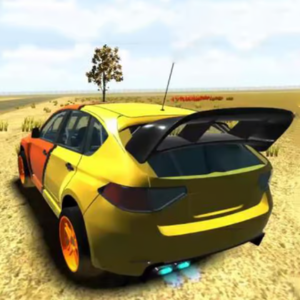
3D Car Simulator
🏎️ Pure Vehicle Dynamics Playground
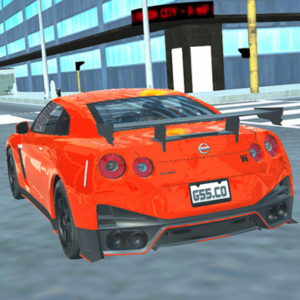
3D Car Simulator is less of a "game" in the traditional sense and more of a physics tech demo turned interactive sandbox. It creates a controlled environment to test the limits of WebGL vehicle rendering. There are no races, no timers, and no enemies. The objective is intrinsic: to master the handling characteristics of three distinct archetypes: a Rally Car, a Police Car, and a Vintage Car.
The engine simulates complex forces such as oversteer, understeer, and suspension bottoming. It serves as an excellent stress-relief tool or a training ground for understanding how digital cars react to high-speed inputs without the penalty of a "Game Over."
🧠 Exploratory Learning
The sandbox nature encourages self-directed play:
- Limit Testing: Players naturally tend to test the boundaries—"How fast can I go before I lose control?" This is an exercise in finding the edge of the physics simulation.
- Environmental Interaction: The map includes ramps and open spaces. The brain experiments with trajectory: "If I hit this ramp at 100mph, where will I land?"
🎮 The Fleet
Analyzing the differences:
- Rally Car: High torque, loose traction. Designed for drifting. It enters a slide easily and is controllable at high slip angles.
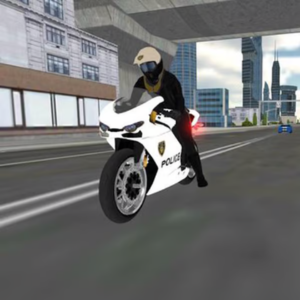
- Police Car: Heavy, stable, high top speed. It resists rolling over but has a large turning radius. Features a working siren (audio-visual feedback).
- Vintage Car: Soft suspension, rear-wheel drive. Prone to "body roll." Driving this requires smooth inputs to prevent the chassis from unsettling the tires.
🏆 Simulation Activities
1. The Drift Circle
Find a wide open area. Attempt to hold a continuous drift in a circle using the Rally Car. This requires balancing the throttle (W) and the counter-steer (A/D) to maintain a constant radius.
2. High-Speed Collision Test
Drive the Police Car at max speed into a wall or ramp. Observe the deformation (if enabled) or the kinematic reaction. It's a study in digital momentum.
🛡️ Technical Engine
Under the hood:
- Unity WebGL: Likely built on the Unity engine, utilizing its standard WheelCollider components for realistic friction curves.
- Open World: The map is loaded as a single chunk, allowing for seamless driving without loading screens.
❓ FAQ
Can I get out of the car?
No, you are bound to the vehicle. You can only switch between vehicles using the menu keys (usually 1, 2, 3).
Is there damage?
Visual damage may be limited, but the physics reaction to crashes is simulated.