Block Puzzle
🧩 Block Puzzle: Spatial Packing & Optimization Logic
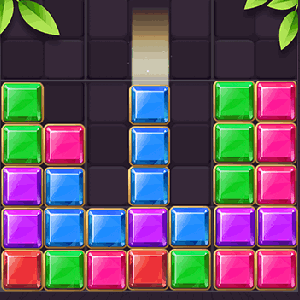
Block Puzzle (often appearing as 10x10 or similar variants) is a pure logic game that strips Tetris of its gravity and time pressure, replacing them with Spatial Packing Theory. The objective is to fit polyominoes (geometric shapes) into a grid to clear rows and columns. At Watch Documentaries Games, we classify this as a "Resource Management Puzzle," where the finite resource is empty grid space.
The game is turn-based. The player is dealt three shapes at a time. The game ends when a shape in the hand cannot legally be placed on the board. This creates a distinct strategic tension: maximizing immediate score versus preserving long-term survival space.
⚠️ The Greedy Algorithm Trap
The most common failure state for beginners is succumbing to the Greedy Algorithm—always placing the biggest block immediately to get it out of the way. This is often fatal.
- The 3x3 Threat: The game's RNG (Random Number Generator) will eventually deal a massive 3x3 square. If you do not have a 3x3 void available, the game ends.
- Reservation Strategy: The optimal strategy is to always maintain a 3x3 open space or a 5-unit line in the center of the board. Treat this space as "reserved" and do not fill it unless you can immediately clear the lines to reopen it.
🧠 Clearing Mechanics: Cross-Clears
Efficiency in Block Puzzle comes from the Cross-Clear (clearing a row and a column simultaneously).
- Score Multipliers: Most versions award bonus points for multi-line clears.
- Center Control: Clearing lines in the center is more valuable than clearing edges. The center is the most flexible area for placing large, complex shapes. Edge clearing often leaves isolated, unusable single cells ("islands").
🏆 Tactical Insight: Corner Building
The Foundation: Build from the corners inward. Placing small, awkward shapes in the corners keeps the high-value central real estate open for the large blocks. Think of the board as a warehouse; you pack the small boxes in the back so the forklift has room to move in the middle.
Is Block Puzzle a game of luck or skill?
While the pieces are dealt randomly, Block Puzzle is 90% skill. A skilled player can survive bad RNG by maintaining a highly efficient board structure ("Swiss Cheese" vs "Solid Wall"). The ability to forecast placement for the next 3 moves mitigates the luck factor.
❓ FAQ
Can I rotate blocks?
In the classic version, no. The inability to rotate is the primary constraint. Some modern variants add rotation as a power-up.
What is a good score?
Scores above 2000 typically indicate a grasp of the "Reservation Strategy." Scores below 1000 usually result from playing too aggressively.