Descent
🔻 The Psychology of Downward Progression
Descent inverts the traditional platformer trope. Instead of moving "Right" (progression) or "Up" (climbing), the goal is to survive the fall. This shift in axis changes the player's anticipatory focus. In a vertical scroller, gravity is not just a force; it is the propulsion engine. The player does not control the speed of the scroll; they control their lateral position relative to the impending hazards coming from below.
The game creates a sense of claustrophobia and urgency. The limited viewport means players must react to obstacles entering the frame with millisecond latency. It acts as a continuous reflex test where "stopping" is not an option.
🧠 Visuospatial Processing Speed
The game engages specific neural pathways:
- Vertical Tracking: The eyes must scan the bottom 20% of the screen constantly (the "danger zone"), rather than the center. This peripheral alertness is taxing on the visual cortex.
- Velocity Estimation: Objects fall at different rates (parallax backgrounds vs. active threats). The brain must filter out the background noise to focus on the collision hitboxes.
🎮 Mechanics: Controlled Falling
Key survival variables:
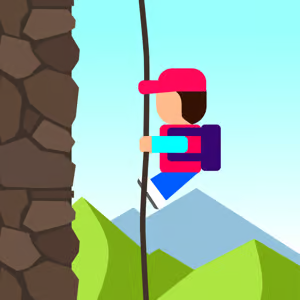
- Terminal Velocity: Unlike realistic physics, your fall speed is often capped or modulated by "braking" mechanics (e.g., sliding down walls or using a rope). Managing this speed is crucial—fall too fast, and you hit a spike before seeing it; fall too slow, and the crushing ceiling catches you.
- Resource Scarcity: Health packs or oxygen tanks are placed in hard-to-reach lateral niches, forcing a risk/reward decision: deviate from the safe center path to get loot, or play it safe?
🏆 Survival Tactics
1. The "Center Bias"
Statistically, in procedurally generated vertical runners, the center of the shaft offers the most options for evasion (Left or Right). Hugging the walls limits your escape vectors by 50%. Stay central unless forced to move.
2. Look Ahead (Look Down)
Do not watch your character. Watch the space two inches below your character. Your peripheral vision will track your avatar; your foveal (focused) vision needs to be identifying the next platform.
🛡️ Technical Specs
Performance details:
- Procedural Generation: The level chunks are randomized. The seed changes every run, preventing rote memorization of the layout.
- Hitbox Fidelity: Uses pixel-perfect collision detection, meaning a single pixel of your sprite touching a spike results in damage.
❓ FAQ
Is there a bottom?
In the endless mode, no. The goal is to achieve the highest depth score. In adventure mode, there are distinct levels.
Why do I take damage from falling?
Some versions implement "fall damage" if you drop too many grid units without touching a platform, simulating impact trauma.