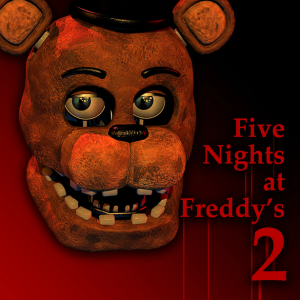
Five Nights at Freddy's 2
🐻 FNAF 2: A Study in Multitasking Under Pressure
Five Nights at Freddy's 2 acts as a rigorous simulation of cognitive overload. Unlike its predecessor, which relied on power management and physical barriers (doors), this iteration removes the illusion of safety. It forces the player to engage in a high-stakes game of "Red Light, Green Light" with eleven distinct AI entities, each possessing unique pathfinding algorithms and trigger conditions.
From an analytical perspective, this title is less about "jumpscares" and more about resource prioritization. The player must balance the finite energy of the flashlight against the infinite winding requirement of the Music Box. This dynamic creates a constant tension between active surveillance and passive defense mechanisms, making it a favorite for strategy enthusiasts and horror theorists alike.
🧠 Cognitive Load & Reaction Training
Mastering this simulation requires the development of specific neural pathways related to split-second decision making:
- Auditory Processing: Players must learn to identify threats (like Mangle's radio static or breathing in vents) solely by sound before visual confirmation.
- Pattern Recognition: Distinguishing between the "Withered" animatronics (which require immediate reflexes) and "Toy" animatronics (which have delayed movement patterns).
- Rhythmic Management: The Music Box creates a mandatory rhythm that disrupts all other defensive strategies, forcing the player to adapt to a forced cadence.
⚙️ Gameplay Mechanics: The Mask vs. The Light
The core innovation in this 2025-compliant HTML5 version is the seamless input latency for the Freddy Fazbear Head mechanic:
- The Freddy Mask: Your primary defense. Putting it on fools facial recognition systems. However, it is ineffective against Foxy and the Puppet. Knowing when to equip it—often within 0.5 seconds of lowering the monitor—is the skill gap between casual players and survivors.
- The Flashlight: Essential for resetting Foxy's aggression level and checking blind spots in the main hallway. Battery management is crucial; without light, you are vulnerable to specific threat vectors.
🏆 Pro Strategies for Nights 4-6
1. The "Wind and Flash" Loop
Do not check cameras primarily for animatronics. Your loop should be: Open Monitor > Wind Music Box (Prize Corner) > Close Monitor > Immediately Mask (if visual cue present) OR Flashlight Center > Repeat. This reduces RNG (Random Number Generation) dependance.
2. Auditory Cues Over Visuals
Experienced players rarely use the side vent lights. The sound of a vent crash is a faster indicator than checking the light. Relying on audio saves milliseconds that are vital for winding the Music Box.
💻 Technical Optimization
This build of FNAF 2 is optimized for browser-based emulation using WebAssembly:
- Audio Latency: Reduced to <20ms for accurate cue detection.
- Asset Preloading: Jumpscare animations are pre-cached to prevent frame drops during critical fail states.
❓ FAQ
Is this a sequel?
Lore-wise, it is widely considered a prequel set in 1987, explaining the events leading up to the first game.
How to stop the Puppet?
The Puppet cannot be stopped by the mask. You must keep the Music Box at the Prize Corner wound up at all times.