Tic Tac Toe
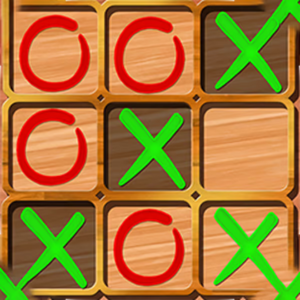
Tic Tac Toe (also known as Noughts and Crosses) is the grandfather of grid-based strategy games. While often dismissed as a child's game, it is actually a profound introduction to Game Theory and algorithmic logic. Played on a 3x3 grid, it is a zero-sum game of perfect information. This version allows you to play against an adaptive AI or against a friend locally.
🧠 Game Theory: The Solved Game
Tic Tac Toe is a "solved game." This means that with perfect play from both sides, the game will always end in a draw. However, humans are not perfect, and understanding the logic behind the "perfect" moves is how you ensure you never lose.
🛡️ The Ultimate Strategy Guide
To master Tic Tac Toe, you must understand the hierarchy of opening moves:
1. The Center (The Strongest Move)
Statistically, taking the center square offers the most potential winning lines (4 lines: vertical, horizontal, and two diagonals). If you go first, always take the center. If your opponent takes the center, you are on the defensive.
2. The Corners (The Trap Setters)
If you cannot take the center, take a corner. Corners are powerful because they allow you to set up "Forks." A fork is a scenario where you have two separate winning threats. Your opponent can only block one, guaranteeing you a win on the next turn.
3. The Edges (The Weakest Move)
Avoid starting with the middle-edge squares. They offer the fewest strategic options and are easily blocked.
🤖 Analyzing the AI
This digital version features different difficulty tiers:
- Easy: The AI places marks randomly. Good for toddlers learning the rules.
- Medium: The AI will block your immediate winning moves but won't plan ahead to set traps.
- Impossible (Minimax): This level uses the Minimax Algorithm. It calculates every possible future game state. It is mathematically impossible to beat this AI; the best you can hope for is a draw. Playing against it is excellent mental training.
🌍 Cultural Variants
While the 3x3 grid is standard, the game has evolved. Advanced versions included here or found in the genre include:
- 5-in-a-row (Gomoku): Played on a larger board, removing the "draw" limitation.
- 3D Tic Tac Toe: Played on a 3x3x3 cube, adding a vertical dimension to the strategy.
- Misere Tic Tac Toe: A variant where the goal is not to get three in a row.
🎓 Why Play in 2025?
In a world of complex simulations, Tic Tac Toe remains a fundamental tool for teaching logic, turn-taking, and sportsmanship to children. For adults, the "Impossible" mode serves as a quick cognitive warm-up to engage the analytical parts of the brain.