Moto Maniac 2
🌉 Moto Maniac 2: Environmental Variables & Bridge Dynamics
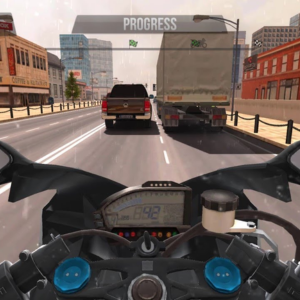
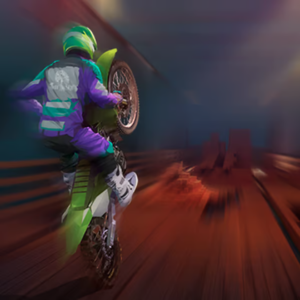
Moto Maniac 2 elevates the trials simulation by introducing environmental complexity. While the first game tested throttle control on static objects, the sequel, available on Watch Documentaries Games, forces players to adapt to dynamic surfaces and reduced visibility. Set on a series of suspension bridges under the cover of night, the game adds a layer of psychological pressure to the physics puzzle.
The rendering engine now includes dynamic lighting, which isn't just cosmetic. The limited cone of the headlight forces players to react to terrain changes with less warning time, increasing the requirement for reflexive adaptation over rote memorization.
🧠 Adaptation: Dynamic Surfaces
The critical new variable is the non-static surface:
- Plank Physics: The bridges are made of individual planks. Some are loose. Driving over them causes them to shift or fall. The player must maintain a minimum velocity (momentum) to cross these sections; stopping is fatal.
- Oscillation: The bridges sway. Your movement introduces energy into the bridge system. If you rock back and forth, the bridge creates a wave motion that can throw you off. This requires "counter-phase" driving to stabilize the platform.
🎮 Sequel Mechanics
The game builds upon the original physics engine with new constraints:
- Drone Pursuit: In some levels, a drone follows the rider. It acts as a camera but also a timer. If you are too slow, the lighting rig moves on, leaving you in pitch darkness.
- Steeper Gradients: The sequel features nearly vertical walls. Climbing these requires the "Wall Climb" technique: hitting the wall with the front wheel high, then leaning forward instantly to hook the tire over the ledge.
🏆 Strategic Focus: Momentum Preservation
1. The "Flow" State
Unlike the first game where "Stop and Go" was viable, Moto Maniac 2 punishes hesitation. The loose bridges require constant forward motion. You must read the terrain 3 steps ahead to ensure you have enough speed to carry over falling planks.
2. Night Vision Management
Focus your eyes on the edge of the headlight beam, not the bike. By the time an obstacle is under your wheels, it is too late to react. You must process visual data at the periphery of the light source.
❓ FAQ
Is this harder than the first one?
Yes, the dynamic bridges introduce randomness that was not present in the static levels of the first game.
How many levels?
The game features multiple distinct environments, each introducing new bridge mechanics.