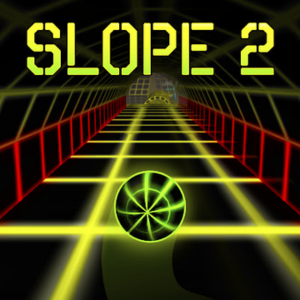
Slope 2
🧬 Evolution of the Endless Runner: A Technical Analysis
Slope 2 represents a significant iteration in the browser-based kinetic genre. Unlike its predecessor, this simulation utilizes an upgraded Unity WebGL pipeline that allows for sharper hitboxes and more complex geometric obstacles without sacrificing frame rate. It creates a seamless flow state where the player controls a sphere accelerating down an infinite, procedurally generated neon decline.
The core appeal lies in its deterministic physics engine. Gravity remains constant, but the lateral velocity varies based on player input and surface friction. This creates a "high-stakes" environment where a single millisecond of latency in decision-making results in failure. It is designed to test the limits of visual-motor integration.
🧠 Cognitive Load & Reflex Training
Engaging with high-velocity simulations like this activates specific neural pathways:
- Occipital Lobe Activation: The high-contrast neon visuals against a dark background force rapid optical tracking, improving dynamic visual acuity.
- Predictive Processing: The brain must calculate the trajectory of the ball relative to moving platforms, training the ability to anticipate future states (forward planning).
- Flow State Induction: The game's increasing speed forces the brain into beta-wave dominance, associated with high focus and alert engagement.
🎮 Mechanics & Control Physics
Mastering this title requires understanding its mechanical nuances:
- Momentum Conservation: Unlike arcade racers, you cannot brake. Your only variable is lateral movement (A/D or Arrow Keys).
- Hitbox Precision: The sphere's collision mesh is strictly spherical. Clipping the edge of a platform with even 1% of the mesh triggers a "fall" state. Precision is paramount.
- Procedural Geometry: The course is generated algorithmically. No two runs are identical, which prevents rote memorization and forces reactive gameplay.
🏆 Advanced Strategies: Managing Velocity
1. The "Center-Line" Bias
Statistically, the safest path is the geometric center of any platform. While red diamonds (bonus items) often lure players to the edges, the risk of erratic physics interactions increases near the vertex of a polygon. Maintain center positioning unless forced to deviate.
2. Anticipating The "Red Obstacles"
Static obstacles significantly decrease the available traversable surface area. Experienced players focus their gaze not on the ball, but on the horizon line (approx. 2 inches above the ball on screen). This peripheral vision technique allows for earlier reaction times.
🛡️ Technical Specifications
Optimized for modern browser environments:
- Rendering: WebGL 2.0 with hardware acceleration support.
- Input Lag: Minimized to < 16ms for 60Hz displays to ensure 1:1 input tracking.
- Compatibility: Fully playable on Chromebooks, standard laptops, and desktop rigs without dedicated GPUs.
❓ FAQ
Is this harder than the original?
Yes. The acceleration curve is steeper, and the obstacles appear with greater frequency earlier in the run.
Can I play offline?
The game requires an initial handshake to load assets, but cached sessions can often run with intermittent connectivity.