Stick Fighter
🥋 Stick Fighter: The Purity of Physics Combat
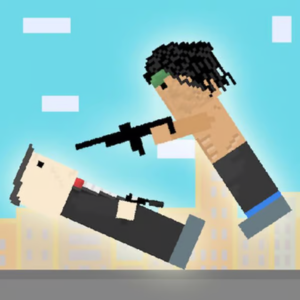
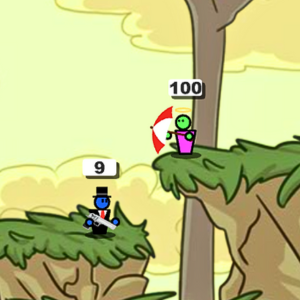
Stick Fighter strips the fighting game genre down to its absolute essentials: spacing, timing, and physics. Unlike complex fighters with 50-move command lists, this game relies on a minimalist control scheme where the complexity emerges from the interaction of rigid bodies. The characters are simple geometric stick figures, but their movement carries weight and momentum. The core loop involves managing your character's center of mass to deliver strikes while avoiding the opponent's limbs.
In the 2026 browser gaming scene, this title is often cited as a "footsies simulator." It forces players to understand the concept of neutral game—the phase of combat where neither player has the advantage, and both are jockeying for position. Without projectile attacks, you must close the distance physically, risking a counter-hit.
🧠 Cognitive & Reflex Training
Success in Stick Fighter requires acute mental processing:
- Spacing (Spatial Awareness): Knowing exactly how far your punch reaches is vital. Players develop a "mental ruler," engaging only when the opponent is within pixel-perfect range. Whiffing (missing) an attack leaves you vulnerable.
- Reaction Time: The game moves fast. Blocking isn't usually a held button; it's often about moving backward or ducking. Reacting to the start-up animation of an enemy kick requires sub-200ms reflexes.
- Pattern Recognition: Human opponents have habits. Do they jump a lot? Do they slide? Recognizing these behavioral patterns allows you to pre-emptively strike where they will be.
🎮 Mechanics & Hitbox Logic
The engine uses specific collision rules:
- Priority System: Not all hits are equal. A kick aimed at the head usually beats a punch to the chest due to reach. Understanding hitbox priority allows you to win trades (where both players hit at once).
- Momentum Damage: In many physics brawlers, damage is calculated based on velocity. A running punch deals more damage than a standing punch because $Force = Mass \times Acceleration$. Using momentum is a key damage multiplier.
- Ragdoll States: A heavy hit often knocks a player off balance (stun state). Capitalizing on this state to land a combo before they recover their footing is the primary win condition.
🏆 Dueling Strategy
1. The "Poke" Strategy
Don't commit to heavy attacks constantly. Use quick, low-commitment attacks (jabs or low kicks) to keep the opponent at bay. Frustrate them into making a risky jump, then punish their landing.
2. Corner Pressure
The stage has edges. Pushing an opponent into the corner limits their movement options (they can't backdash). Once cornered, you can play aggressively, knowing their only escape is to jump over you—which is an easy movement to predict and counter.
🛡️ Technical Specifications
Lightweight and responsive:
- Input Lag: The engine is optimized for zero-latency input, essential for a genre where frames matter.
- Visuals: High-contrast stick figures ensure clarity. The lack of visual clutter allows the brain to focus entirely on the combat flow.
❓ FAQ
Is there a block button?
Usually no. Defense is handled by movement (spacing) or crouching to avoid high attacks.
Can I play with a friend?
Yes, local 2-player mode on the same keyboard is the intended way to play for maximum fun.