Stickman Parkour 3
🏃 Stickman Parkour 3: Flow State & Momentum Conservation
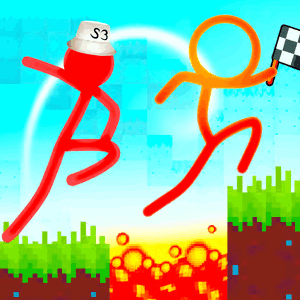
Stickman Parkour 3 continues the lineage of high-precision 2D platformers popularized by the Vex series. It is a simulation of momentum conservation and aerobic traversal. At Watch Documentaries Games, we analyze this title as a study in "Flow State Gaming." Unlike exploration platformers, the goal here is velocity; stopping is often synonymous with failing.
The physics engine emphasizes frictionless movement. Mechanics like sliding and wall-jumping are designed to maintain forward inertia. The level design often features "Speed Blocks" or "Bounce Pads" that act as velocity multipliers, forcing the player to react at speeds exceeding standard cognitive processing time.
🧗 Traversal Mechanics
Success requires mastering a specific vocabulary of movement:
- The Wall Jump: This is not just for climbing; it is for rhythm. Jumping off a wall resets your "Air Dash" or double-jump capability in many engine iterations. The angle of departure is critical—jumping too far away from the wall loses height; jumping too close limits forward distance.
- The Slide (Hitbox Manipulation): Sliding (S or Down) drastically reduces the character's vertical hitbox. This allows the player to pass under spikes. Advanced players use the slide even on flat ground to minimize their target profile against projectiles.
- Ledge Grabbing: The engine allows for a generous "Coyote Time" (the ability to jump slightly after leaving a platform) and ledge forgiveness. Trusting this margin of error allows for riskier, faster jumps.
🎮 Level Design Analysis
The stages are constructed as Rhythm Puzzles:
- Cycle-Based Obstacles: Spinning blades and crushing blocks operate on fixed time loops. The player must synchronize their entry into the sector with these cycles. Hesitation desynchronizes the player, forcing a wait for the next cycle and ruining the speedrun time.
- Verticality: Stickman Parkour 3 utilizes vertical scrolling. Falling often doesn't mean death, but rather losing progress (falling to a lower tier), which is a psychological punishment common in games like Getting Over It.
🏆 Speedrun Strategy: Damage Boosting
Invincibility Frames (I-Frames): In non-lethal interactions, taking damage often provides a brief window of invincibility and a knockback effect. Expert speedrunners intentionally take damage from a spike to be propelled backward or forward across a gap that is otherwise impassable, utilizing the knockback vector as a propulsion tool.
❓ FAQ
Why can't I wall jump sometimes?
You may be holding the direction key towards the wall. To wall jump efficiently, you must press the jump key while holding the direction away from the wall.
Is there a double jump?
Check the level specific modifiers. Some levels grant temporary power-ups that enable mid-air jumps.