Tetris Flash
⚡ Tetris Flash: High-Velocity Stacking and Reflexes
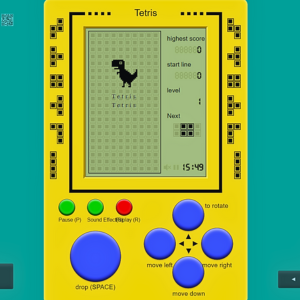
Tetris Flash refers to the legacy of Flash-based Tetris iterations that prioritized speed and responsiveness over modern graphical bells and whistles. This version creates a pure, high-velocity stacking experience. The gravity scales aggressively; at later levels, blocks spawn and lock almost instantly ("20G" gravity). The challenge is purely mechanical: can your fingers keep up with your brain?
In the 2026 retro gaming scene, Tetris Flash is appreciated for its "No Hold" mechanics (often) and strict rotation systems, harkening back to the Game Boy era difficulty where mistakes were harder to fix.
🧠 Cognitive & Motor Skills
The game is a benchmark for processing speed:
- Pattern Recognition Speed: The player sees a shape. The brain must instantly match it to a hole. As speed increases, this matching process must become subconscious (System 1 thinking).
- Look-Ahead: At high speeds, you cannot react to the current piece. You must be placing the current piece while looking at the next piece in the preview window. This "buffering" of actions is a pro skill.
- Recovery Logic: When a mistake happens (misdrop), panic sets in. The ability to stay calm and execute a "skim" (clearing single lines to lower the stack) is a test of emotional regulation.
🎮 Mechanics & Rotation Systems
Understanding the specific engine quirks is vital:
- Rotation System: Older Flash games often use different rotation rules than modern SRS (Super Rotation System). A piece might not "kick" (move) if rotated against a wall. Players must learn the specific rotation logic of this build.
- Lock Delay: The time between a piece touching the ground and locking in place. In Flash versions, this is often short. You can't "wiggle" the piece forever. Precise placement is required on the first try.
- Level Scaling: Speed increases every 10 lines. The transition from Level 9 to Level 10 is often a massive difficulty spike requiring a shift in posture and focus.
🏆 Survival Strategy
1. Play Low and Flat
In high-speed modes, do not build high towers for Tetris (4 lines). It is too risky. Keep your stack low and flat. Clear singles and doubles. Survival is more important than score.
2. The Pyramid Shape
Try to keep your stack shaped like a pyramid (high in the center, low on the edges). This gives you the most freedom to slide pieces to the left or right walls. A concave stack (low middle, high sides) restricts movement.
🛡️ Technical Info
Lightweight retro emulation:
- Technology: Likely running via Ruffle (Flash emulator) or HTML5 port, ensuring it works on modern browsers without plugins.
- Controls: Arrow keys. The classic layout.
❓ FAQ
Can I save my score?
Usually saves locally to the browser cache.
Is there a hold button?
Classic Flash versions often lack the 'Hold' feature, forcing you to use every piece dealt.