Thumb Fighter
👍 Thumb Fighter: The Psychology of Anticipation
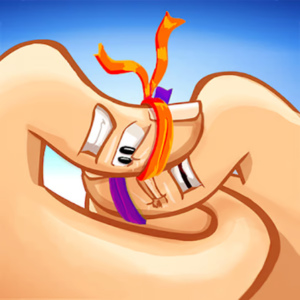
Thumb Fighter is a masterclass in minimalist design, reducing the complex genre of fighting games to a single input. It simulates the classic schoolyard game of Thumb War. While it appears to be a game of speed, it is actually a game of Patience and Baiting. The mechanic is binary: hold to attack, release to retreat. However, the depth lies in the Stamina/Health Bar system.
Every attack depletes energy. If you hold the button down (attack) and miss, or if your attack is blocked, you lose momentum. The game penalizes aggressive button mashing. The winning strategy is often to wait for the opponent to strike, let them miss, and then counter-attack while they are in the recovery animation.
⚔️ Hitbox Interactions
The physics are localized to the thumb tip:
- The Lock: If both players attack simultaneously, their thumbs lock. This creates a stalemate where damage is neutralized, but tension builds.
- The Clean Hit: To score damage, the top of your thumb must connect with the top of the opponent's knuckle. This requires precise timing—attacking exactly when the opponent is idle.
🎭 Character Cosmetic Variation
While the mechanics remain constant, the game offers dozens of skins (from Luchadors to Bat-Thumb). Psychologically, these skins act as visual distractors. Some skins have larger visual profiles (like hats), which can obscure the actual hitbox, making it harder for the opponent to judge the distance.
🧠 Cognitive Load for Kids
For younger players, this game is an excellent tool for training Inhibitory Control. The urge is to press the button constantly. To win, the child must suppress this urge and wait for the right moment, training the prefrontal cortex functions related to impulse control.
❓ FAQ
Is there a timer?
No, the round ends only when one player's health bar is fully depleted.
Can I play against the computer?
Yes, the single-player mode features an AI that adapts to your timing, becoming harder to bait in later levels.