Moto Trial Racing 2
🏍️ Moto Trial Racing 2: 3D Torque and Terrain Physics
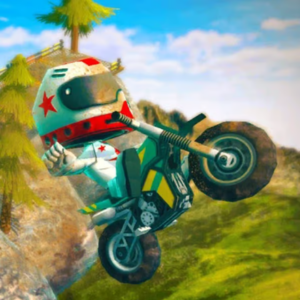
Moto Trial Racing 2 distinguishes itself from the plethora of 2D side-scrollers by offering a robust 3D physics environment. While games like Moto X3M focus on arcade speed, this title emphasizes simulation-lite mechanics involving suspension compression, tire grip, and the center of gravity. The player controls a trial bike—a machine designed not for top speed, but for torque and explosive power—across diverse biomes ranging from industrial rooftops to arid canyons.
In the context of 2026 browser gaming, this title is notable for its split-screen multiplayer capability, a feature often absent in WebGL titles. It allows for competitive local play where managing physics becomes a tactical advantage over pure speed.
🧠 Cognitive & Motor Skills: Spatial Balance
The game demands a high degree of spatial reasoning and fine motor control:
- Center of Mass Management: Unlike cars, bikes are unstable. The player must actively manage the rider's weight shift (leaning forward or backward) to prevent wheelies on ascents or endos (flipping forward) on descents. This is a continuous balancing act.
- Throttle Control (Feathering): Full throttle often leads to loss of traction or flipping. Players learn to "feather" the accelerator, applying power in short bursts to climb obstacles without losing control. This trains impulse inhibition.
- 3D Spatial Awareness: Navigating 3D turns requires understanding the racing line—entering wide and exiting tight—to maintain momentum without flying off the edge of the track.
🎮 Mechanics & Engineering Analysis
The physics engine simulates several key mechanical concepts:
- Suspension Damping: You can see the shocks compress upon landing. A stiff landing (flat surface) transfers energy to the chassis, often causing a crash. A sloped landing allows the suspension to absorb the impact, preserving forward momentum.
- Surface Friction: Different textures (mud, asphalt, metal) offer different friction coefficients. Metal ramps are slippery, requiring smoother inputs, while dirt tracks allow for aggressive cornering.
- Torque vs. RPM: Trial bikes have high torque at low RPM. The game simulates this; you have immense climbing power from a standstill, but top speed is capped, shifting the focus to technical traversal rather than drag racing.
🏆 Pro Racing Strategies
1. The "Pre-Load" Jump
Just before hitting a ramp, lean back slightly to compress the rear suspension. As you leave the lip, the suspension rebounds, giving you extra height. This technique (seat bouncing) is essential for clearing large gaps that normal acceleration cannot bridge.
2. Air Control and Correction
You have significant control in the air. Use the brake (which dips the nose) and the throttle (which raises the nose due to gyroscopic wheel forces) to align your landing angle perfectly with the slope. A parallel landing is crucial for speed preservation.
3. The Inside Line
In race mode, the AI tends to take the middle line. Aggressively cut to the inside of corners. Use the opponent as a "brake" if necessary—colliding with them in a turn can stabilize your bike while destabilizing theirs.
🛡️ Technical Specifications
Optimized for performance and compatibility:
- Rendering: Utilizes WebGL 2.0 for dynamic lighting and shadow casting, giving depth to the jumps and obstacles.
- Input Lag: Optimized input handling ensures that subtle balance corrections are registered instantly.
❓ FAQ
Is this 2 Player?
Yes, it supports local split-screen multiplayer on the same keyboard/device.
How do I unlock new bikes?
You earn cash by winning races and completing levels. This cash can be spent in the garage on bikes with better speed and handling stats.