Shortcut Race
🌉 The Geometry of Efficiency: Shortest Path Algorithms
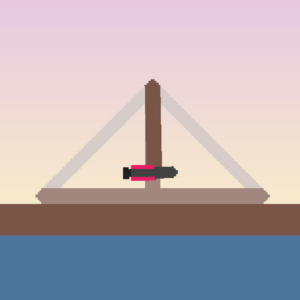
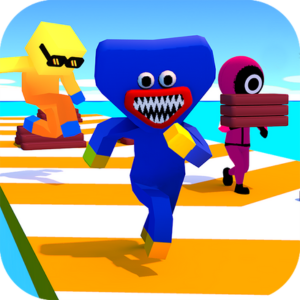
Shortcut Race gamifies the computer science concept of pathfinding optimization. Unlike standard racing games where speed is determined by throttle control, here velocity is a function of resource allocation. The player collects wooden planks (resources) and must decide in real-time whether to follow the pre-defined track geometry or consume resources to build a bridge across the void, creating a secant line through a curve.
This mechanic creates a constant risk-reward loop. Building a shortcut reduces distance traveled but depletes your inventory. If you miscalculate the distance and run out of planks mid-void, gravity takes over. It is a practical application of the "Greedy Algorithm"—making the locally optimal choice at each stage.
🧠 Cognitive Load: Spatial Resource Management
Winning requires parallel processing of two distinct variables:
- Inventory Awareness: You must intuitively know how many "meters" of bridge your current stack of planks represents without a HUD counter. This trains estimation and spatial quantification skills.
- Geometric Intuition: Identifying the hypotenuse. You must spot where a straight line (bridge) is significantly shorter than the curved track arc.
- Opponent Analysis: Assessing if an opponent has enough boards to cut you off creates a dynamic strategic layer.
🎮 Mechanics & Physics
The engine handles distinct states:
- Collection Phase: Running speed is constant. The variable is lateral movement to pick up stackable items.
- Construction Phase: Leaving the track mesh triggers the bridge-building state. Planks are consumed at a rate of roughly 2 per second of airtime.
- Drafting/Stealing: Mechanics allow you to use bridges built by opponents, saving your own resources for a later push.
🏆 Strategic Optimization
1. The "Late-Game" Hoard
Novice players spend boards on the first turn. Expert players hoard boards until the final stretch. The track geometry often features a massive water gap near the finish line where a large stack of boards allows you to bypass the entire final chicane.
2. The Bridge Block
You can interfere with opponents by building your bridge slightly diagonally. If you cut across their path while building, the collision physics can knock them off their incomplete bridge.
🛡️ Technical Specifications
Optimized for web performance:
- Dynamic Mesh Generation: Bridges are generated as procedural meshes in real-time, requiring efficient draw-call batching to maintain high FPS on mobile devices.
- Input Lag: Tuned for high responsiveness to ensure precise entry points for shortcuts.
❓ FAQ
What happens if I run out of boards?
You fall. The bridge stops generating immediately, and the physics engine applies standard gravity.
Can I pick up opponent's boards?
No, you can only pick up boards that spawn in the world or are dropped upon a player's elimination.