Stickman Ragdoll Crash Fun
💥 Stickman Ragdoll Crash Fun: Kinetic Impact Simulation
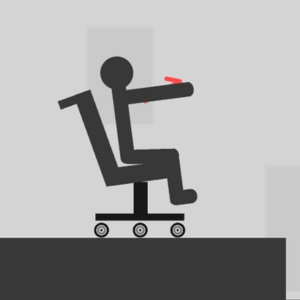
Stickman Ragdoll Crash Fun belongs to the "Dismount" genre of simulation games. It serves as a stress-test for ragdoll physics engines. The objective is the inverse of self-preservation: the goal is to maximize bodily harm through the application of Kinetic Energy (KE = 0.5 * mv²). At Watch Documentaries Games, we analyze this as a study in "Collision Dynamics" and "Score Optimization Algorithms."
The gameplay loop is passive-active. The player sets the initial conditions (Pose, Force, Ejection Point), and the physics engine calculates the deterministic outcome. It acts as a chaos theory generator where small changes in the initial angle result in vastly different damage outputs.
🦴 Scoring Algorithm: The Damage Matrix
Understanding how the game calculates score is key to high performance:
- Bone Breaks: High-velocity impacts against hard surfaces trigger "snaps." Joints (knees, elbows, neck) have lower structural integrity thresholds than long bones (femur). Targeting stairs is optimal because it creates multiple impact events from a single fall.
- Air Time & Flips: Rotational velocity adds a multiplier. A spinning character generates more force upon impact due to the added angular momentum.
- Object Interaction: Hitting props (carts, walls, TNT) adds bonus points. The optimal path involves hitting as many distinct objects as possible on the way down.
⚙️ Physics Engine Exploits
To maximize damage, one must exploit the ragdoll constraints:
- The Scorpion: Positioning the stickman so their legs are forced over their head (hyperextension of the spine) often yields the highest point values due to the game registering multiple joint failures simultaneously.
- Vehicle Ejection: Using vehicles (skateboards, beds, cars) adds mass to the equation. The sudden deceleration of the vehicle transfers all its momentum to the Stickman (Inertia), launching them forward at velocities unreachable by running alone.
🎮 Control & Timing
The primary input is the Power Bar:
- Hold and Release: The power bar oscillates. Stopping it at 100% is not always the best strategy. For stair levels, 50% power might cause the character to tumble down every step, whereas 100% might launch them clear over the stairs to the flat ground, resulting in less total damage.
🏆 Strategy: The Pose Matters
Center of Gravity: Selecting a pose where the character is top-heavy (leaning forward) ensures that the head hits first. Since head impacts usually carry the highest score weightings, maximizing head-first collisions is the meta-strategy for this genre.
❓ FAQ
Is there a way to control the fall?
No, once ejected, the character is at the mercy of the physics engine. You are the director, not the actor.
Which vehicle creates the most damage?
The shopping cart is often best for erratic, tumbling damage, while the rocket bed offers the highest pure velocity.