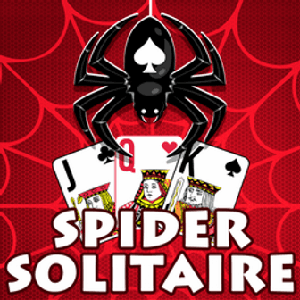
Spider Solitaire
🕷️ Spider Solitaire: Entropy Management and Sorting Algorithms
Spider Solitaire is not merely a game of chance; it is a visual representation of Sorting Algorithms. On Watch Documentaries Games, we analyze it as an exercise in decreasing entropy. The player starts with a disordered system (shuffled deck) and must impose order (completed runs) through a series of logical operations, managing the limited "buffer" space of the ten columns.
Unlike standard Solitaire (Klondike), Spider involves Suit Dependency. The difficulty scales exponentially with the number of suits (1, 2, or 4). In 4-suit mode, the probability of a "dead state" (unsolvable board) increases, forcing the player to build decision trees multiple steps into the future.
🧠 Cognitive Skill: Look-Ahead Logic
Success requires projecting the board state forward:
- The Empty Column: An empty slot is the most valuable resource. It acts as a temporary register in computing, allowing you to swap large stacks of data (cards). Preserving empty columns is a primary strategic imperative.
- In-Order Sorting: Building a stack of mixed suits (e.g., 6♠ on 7♥) gains temporary space but creates "locked" data. The player must calculate the cost of unlocking that stack later against the immediate benefit of the move.
🎮 Mechanics: The Deal
The deal mechanic acts as a chaos injector:
- Forced Layering: Dealing a new row covers all existing stacks. This destroys access to sorted runs. The timing of the deal is critical—you must ensure your tableau is "stable" before introducing new entropy.
- Undo Heuristics: While traditionalists avoid it, using Undo allows players to explore different branches of the decision tree, turning the game into a deterministic puzzle rather than a stochastic gamble.
🏆 Pro Strategy: Suit Segregation
1. Homogeneous Stacking
Always prioritize placing a card on its own suit (e.g., 5♠ on 6♠). This keeps the stack "mobile." A mixed-suit stack cannot be moved as a unit. Mobility is life.
2. Digging for Turnover
Your goal is to reveal face-down cards. If you have a choice between a move that cleans up a stack and a move that flips a face-down card, always choose the flip. Information gain is more valuable than neatness.
❓ FAQ
Is every deal solvable?
No, especially in 4-suit mode, the random seed can generate mathematically impossible layouts.
Why can't I move the stack?
You can only move a stack of cards if they are all in sequential order and of the same suit.